
Why a lower running pace means a faster run
5:00 per kilometre is faster than 6:00. Here is how pace works, why its numbers run in the opposite direction to speed, and how to compare them.
Share article
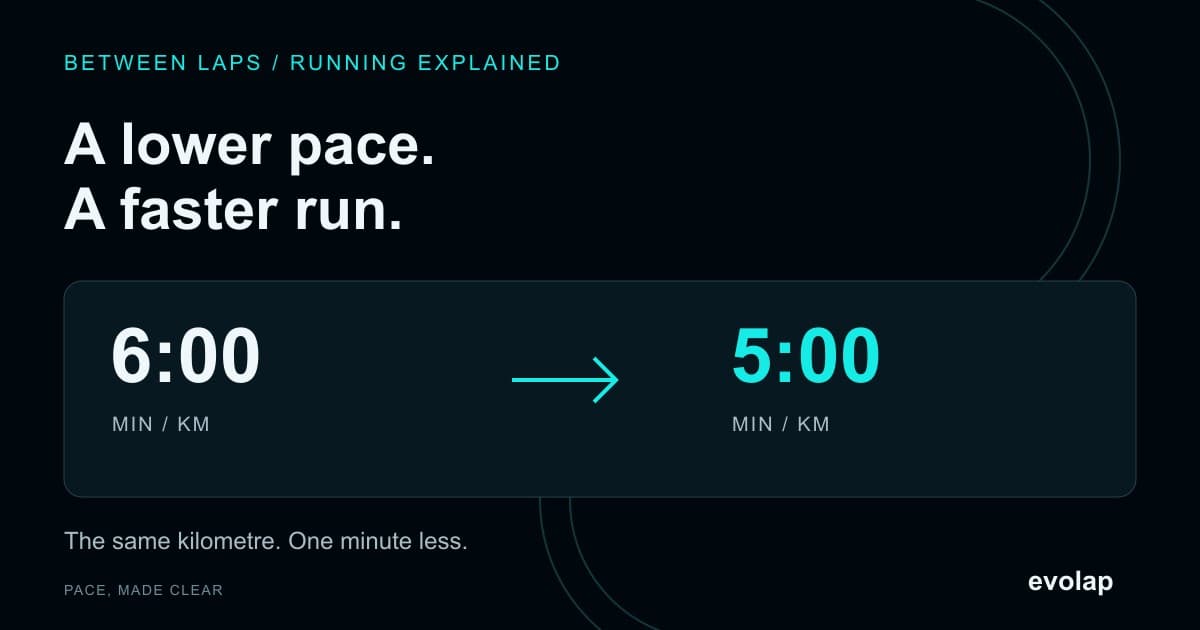
A pace of 5:00 minutes per kilometre is faster than 6:00 minutes per kilometre. You cover the same distance in one minute less. Pace measures time per unit of distance, so a smaller number means less time spent getting there.
That can feel backwards when you are used to speed. On a treadmill, a bigger speed number means you move faster. On a running watch, a smaller pace number can mean exactly the same thing.
Pace asks: how long does one kilometre take?
Think of two runners covering the same kilometre. One takes six minutes. The other takes five. The second runner reaches the finish first, so their speed is higher even though their pace number is lower.
The notation 5:00 /km means five minutes and zero seconds per kilometre. It does not mean five kilometres per hour.
If you maintain those paces for five kilometres:
- At 6:00 /km, you finish in 30 minutes.
- At 5:00 /km, you finish in 25 minutes.
Same distance. Five minutes less elapsed time.
Speed asks: how far do you go in one hour?
Speed turns the question around. Instead of holding distance fixed and measuring time, it describes how much distance you cover in a fixed amount of time.
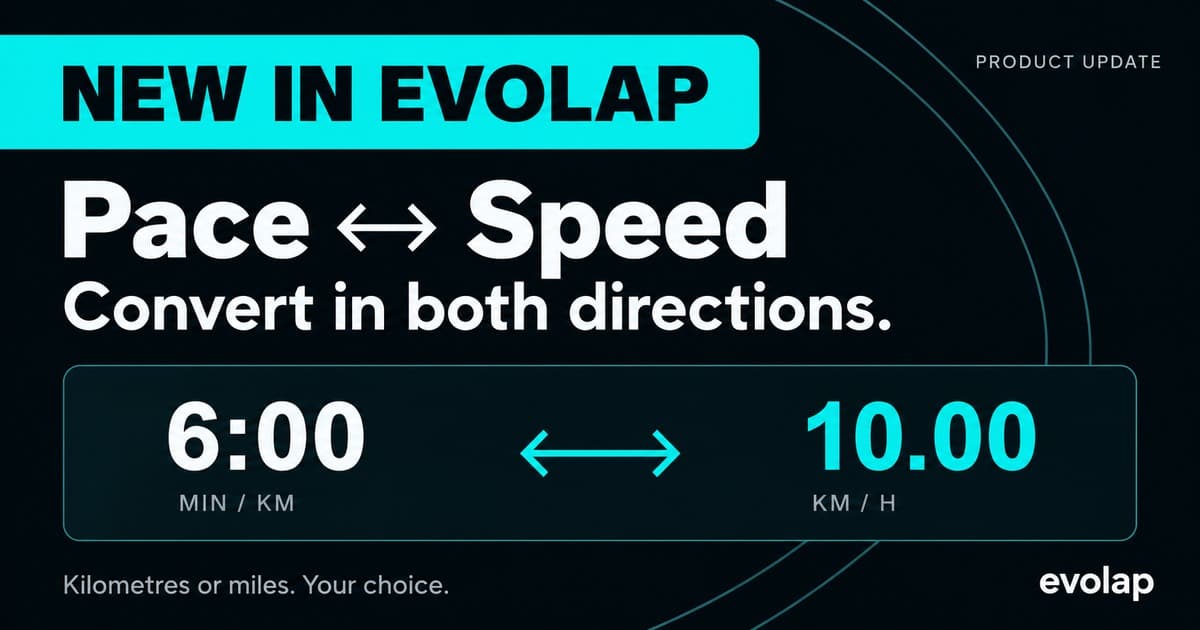
- 6:00 /km equals 10.00 km/h.
- 5:00 /km equals 12.00 km/h.
You can work out the second example by imagining an hour split into five-minute blocks. There are twelve blocks. At one kilometre per block, that is twelve kilometres in an hour.
The pace number falls from six to five while the speed number rises from ten to twelve. Both describe faster movement.
The same idea works in miles
At 10:00 per mile, you cover a mile in ten minutes: 6.00 mph. At 8:00 per mile, you cover it in eight minutes: 7.50 mph.
Compare pace values in the same unit. 5:00 /km and 5:00 /mile are not the same speed: the second covers a longer distance in the same five minutes.
The colon matters
A pace of 5:30 means five minutes and thirty seconds. In decimal minutes, that is 5.5, not 5.30.
To convert a pace yourself, change it to seconds first. Five minutes and thirty seconds is 330 seconds. Divide 3,600 by 330 and you get approximately 10.91 km/h when the pace is per kilometre, or 10.91 mph when it is per mile. The distance unit must match.
The evolap converter handles minutes and seconds separately, so you can enter the pace as it appears on your watch.
A smaller pace number is faster, not automatically better
Pace describes how quickly you cover distance. It does not decide what pace you should run today, or whether one runner’s session was more worthwhile than another’s.
For reading the numbers, remember: less time per kilometre means a faster speed; more distance per hour also means a faster speed.
Want to see the relationship with your own numbers? Open the Pace ↔ Speed Converter, choose your unit, and try 6:00 followed by 5:00.